Mount Toubkal at a glance
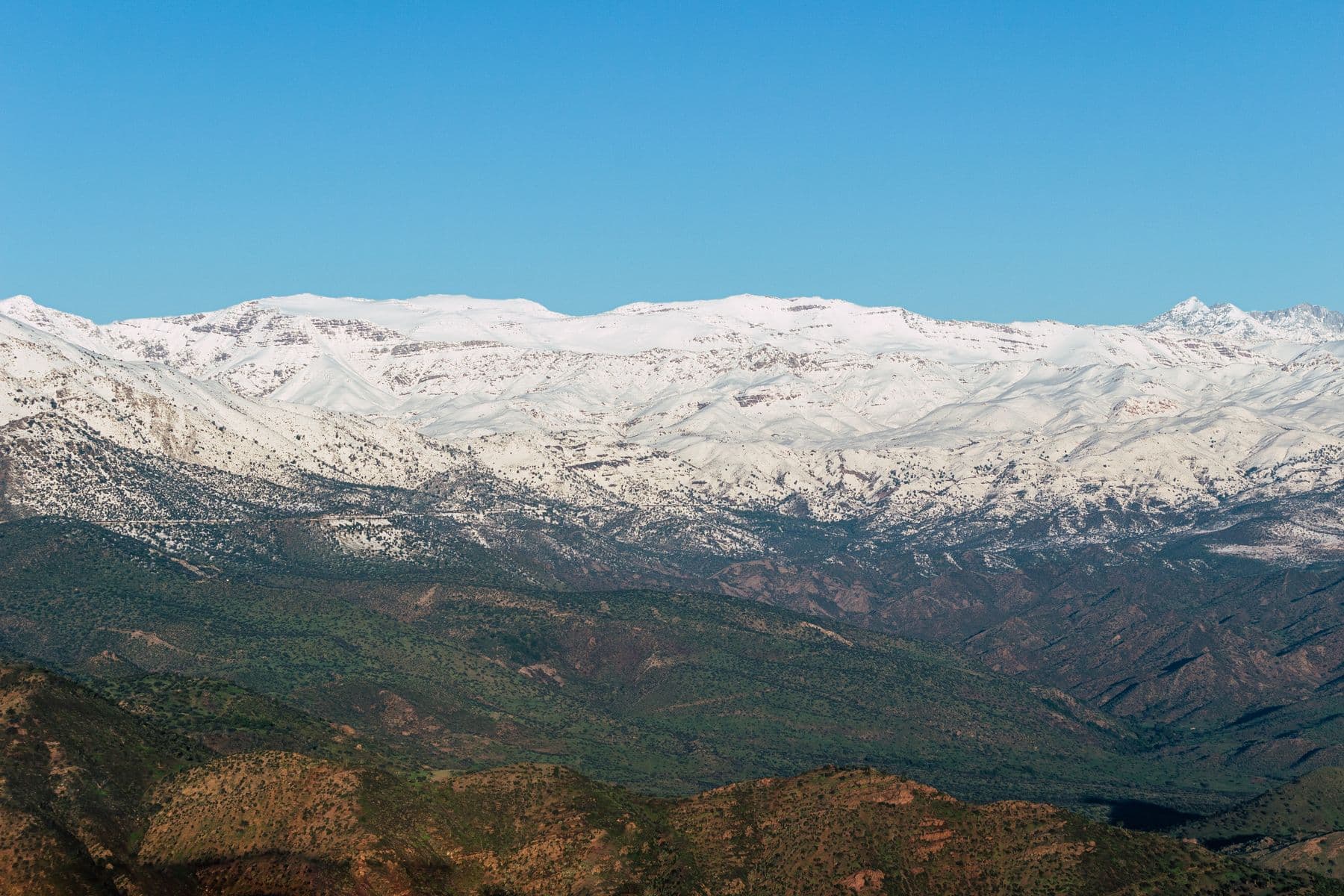
Jbel Toubkal rises to 4,167 m in the Toubkal National Park, about 65 km south of Marrakech. It is the highest summit of the Atlas and of North Africa, and one of the most rewarding high mountains to climb without technical skills.
The ascent starts in Imlil, a Berber village at 1,740 m, about 1.5 hours by road from Marrakech. From there a mule path climbs the Mizane valley to the refuges below the summit, and a stony trail leads to the top.
The classic route, day by day
Day 1, Imlil to the refuge (about 12 km, +1,450 m, 5–6 hours of walking): the trail passes Aroumd, crosses the flood plain and climbs to the shrine of Sidi Chamharouch (2,350 m), a good place for a mint tea. It then rises steadily to the Toubkal refuge at 3,207 m, where you spend the night. Mules carry the luggage.
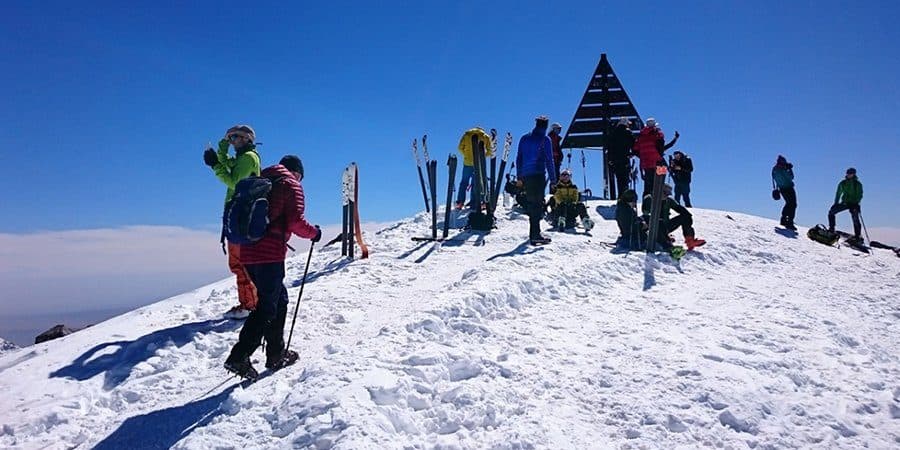
Day 2, summit and descent (about 3–4 hours up, then 5–6 hours down to Imlil): the start is early, often around 4 or 5 am, to reach the summit around sunrise. The path climbs a scree slope to a col, then follows the ridge to the summit tripod. On a clear day the view stretches from the Sahara to the Atlantic plains. You then walk back down to Imlil.
Two days, three days or more?
Two days is the classic ascent and suits fit walkers. The second day is long: around 10 hours of walking with more than 900 m of ascent and over 2,400 m of descent.
Three days gives your body more time to adapt to the altitude: you can sleep a first night lower down, in Imlil or Aroumd, or spend a second night at the refuge after the summit. It is the better choice for a first experience at altitude, for families and in winter.
Longer treks combine Toubkal with the valleys around it, such as the Azzaden valley or the Ouanoukrim peaks, and make the climb part of a journey through Berber villages.
When to climb Toubkal
April to June and September to October are the best months: mild temperatures, little or no snow on the trail and long days.
In July and August the valleys are hot, but the summit stays cool; afternoon storms are possible, so start early.
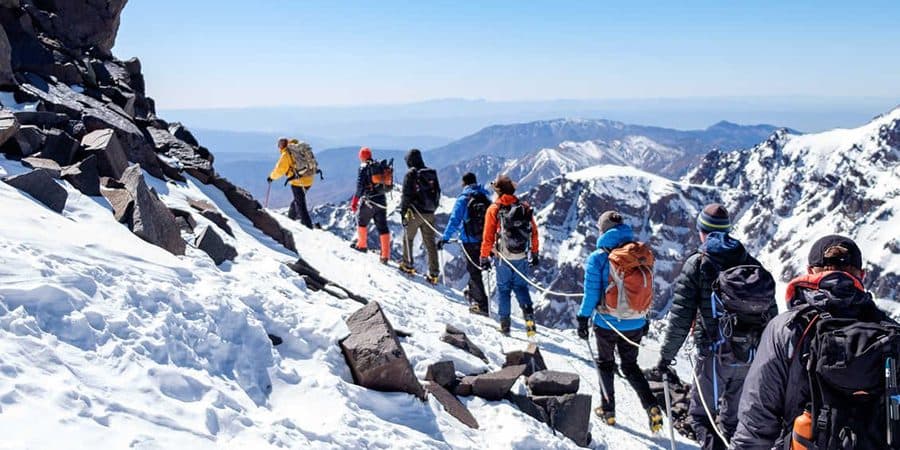
From December to March the mountain is under snow. Toubkal then becomes a winter climb that needs crampons, an ice axe and some mountain experience, with nights below zero at the refuge. It is beautiful, but plan an extra day and follow your guide’s decisions on the weather.
How hard is it? Fitness and altitude
In summer the climb is not technical, but it is physically demanding: long days on stony paths and a steep scree slope near the summit. If you can walk 6 to 8 hours in the hills, you can climb Toubkal.
Above 3,000 m many people feel the altitude: headache, shortness of breath, poor sleep or loss of appetite. Walk slowly, drink a lot and tell your guide how you feel. If the symptoms get worse, going down is the remedy; a three-day programme greatly reduces the risk.
Guides, mules and refuges
A licensed mountain guide is required to climb Toubkal. Your guide knows the route in every season, sets the pace, watches the weather and how the group feels, and shares the life of the mountain villages along the way.
Muleteers and their mules carry the luggage, food and equipment from Imlil to the refuge, so you only walk with a day pack. At the refuge you sleep in dormitories, with dinner and breakfast prepared there.
What to pack
Even in summer, nights and early mornings are cold at the refuge and on the summit. Pack light, in layers:
- Broken-in walking boots with a good grip
- Warm layers: fleece, down jacket, hat and gloves
- Waterproof and windproof jacket
- Sunglasses, sun cream and a sun hat
- Head torch for the early summit start
- Water bottle (1.5–2 litres) and snacks
- Sleeping bag liner for the refuge; walking poles help on the descent
- In winter: crampons, ice axe and gaiters (your guide will advise you)
Questions about climbing Toubkal
Can a beginner climb Mount Toubkal?
Yes, in summer, if you are in good shape and used to long walks. It is a trek, not a rock climb. A three-day programme is recommended for a first time at altitude.
Do I need a guide to climb Toubkal?
Yes. A licensed mountain guide is required for the ascent, and the guide also organises the mules, the refuge and the meals.
How long does the Toubkal climb take?
Two days for the classic ascent from Imlil: about 5–6 hours to the refuge on the first day, then the summit and the descent to Imlil on the second.
Can I climb Toubkal in winter?
Yes, from December to March, as a winter mountaineering climb with crampons and an ice axe. Some experience is recommended, and the programme depends on the snow and the weather.
Where do you sleep on the Toubkal trek?
At the Toubkal refuge (3,207 m), in dormitories with meals provided. Before or after the climb you can stay in Imlil, at Riad Berber Towers.